
Prologue – The Moment of Recognition
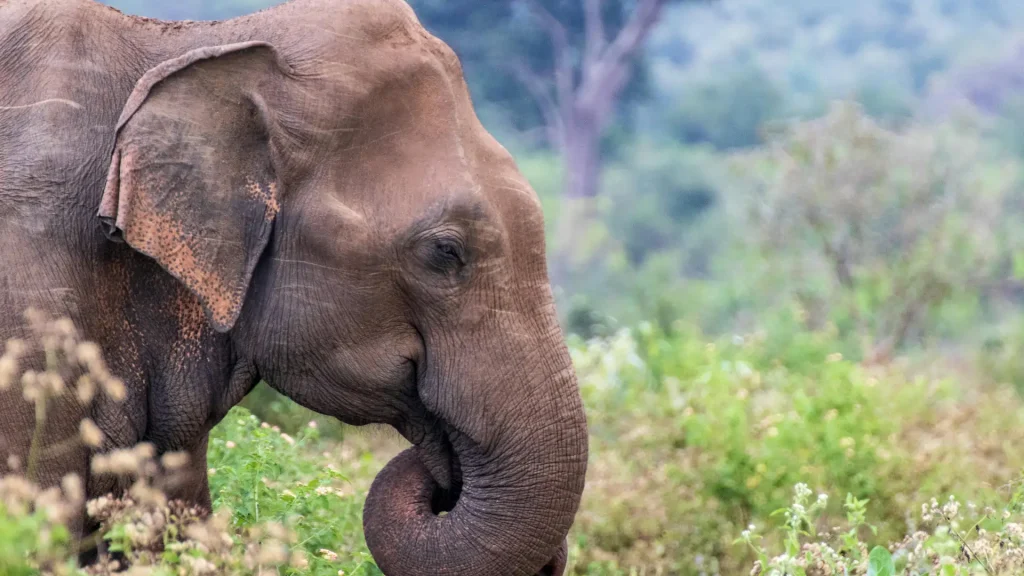
It was a hot afternoon in Bandipur when the matriarch stopped. The herd behind her waited silently, as if understanding her thought. A fallen tree blocked the dusty forest track. With deliberate calm, she used her tusks to shift a branch, clearing the way for her calf. The scene lasted barely a minute, but something about it felt… human. Thoughtful. Deliberate.
Moments like this challenge everything we assume about the wild. The jungle isn’t just a place of instinct and reaction, it’s full of decisions, strategies, memories, and even emotions. Every creature, from the smallest ant to the mightiest elephant, carries within it a spark of intelligence shaped by evolution’s ancient hand.
This is a journey into that unseen world, the minds of animals that think, plan, learn, and feel in ways both alien and astonishingly familiar.
I. The Forest Thinkers – Mammals of Memory and Emotion
The Wise Ones of the Wild: Elephants of India
Follow a herd of elephants through the sal forests of Corbett or the grasslands of Kaziranga, and you’ll witness a choreography guided not by instinct alone but by memory and mentorship. The matriarch knows every bend of a river, every salt lick, every corridor once walked by her ancestors.
She teaches the young how to navigate electric fences, how to find hidden waterholes in dry months, and how to mourn. Yes — mourn. Elephants pause before the bones of their kin, touching them gently with their trunks, standing still for minutes in quiet communion.
It’s hard not to feel that these giants, with their deep rumbling calls and wise eyes, possess an emotional world as rich as our own.

Primates: The Mirror of Ourselves
In the hill temples of Rishikesh, macaques have learned to steal sunglasses and exchange them for fruit, an impromptu barter system no less clever than our own trade.
Langurs in the forests of central India, meanwhile, display remarkable social intelligence. Watch them for an hour, and you’ll see politics at play: alliances formed, disputes settled, infants guarded communally.
Across the animal kingdom, primates show not only problem-solving skills but empathy — comforting distressed companions, recognizing themselves in mirrors, and even deceiving when it suits survival.
Perhaps the most humbling realization is this: they think about us too. Studies have shown that monkeys can distinguish friendly humans from threatening ones — and remember faces for years. The wild watches us as closely as we watch it.

Dolphins: The Ocean’s Philosophers
Far from the forest, in the silvery waters of Chilika Lake, Odisha, fishermen whistle softly. Moments later, sleek grey shapes appear: Irrawaddy dolphins herding fish toward the waiting nets. In this extraordinary dance of cooperation, both dolphins and humans know their roles.
Each understands the other’s rhythm, a partnership born not of training, but of trust and intelligence. Dolphins recognize individual whistles (names, in a sense), use tools, and teach their young new hunting techniques. Some even use bubbles to trap fish in spirals of confusion, an act that seems almost artistic.
If elephants are the wise elders of the land, dolphins are the thinkers of the sea, playful, intuitive, and deeply aware.

Canids: The Strategists of the Grasslands
At dawn in Pench National Park, a pack of Indian wild dogs (dholes) fan out through the tall grass. No words pass between them, only glances and faint whistles. One startles the deer herd; other cuts off the escape route. The teamwork is seamless like a choreographed hunt perfected over millennia.
Each dhole knows its role. When the hunt succeeds, they share the meal equally, showing cooperation rather than dominance. It’s not brute force that defines them as its communication and coordination, the hallmarks of social intelligence.
Even city stray dogs and golden jackals near Delhi’s fringes display similar ingenuity — learning traffic light patterns, forming alliances, and reading human behavior to survive urban chaos.

II. The Feathered Minds – Geniuses of the Sky
Crows: The Black-feathered Thinkers
On a winter morning in Jaipur, I watched a House Crow drop a walnut onto a road and hop back, waiting patiently for a car to crush it. When it did, the crow swooped in during a red light and claimed its prize. That’s strategy and foresight.
Across India, crows have learned to use sticks, mimic human voices, and even recognize individuals who’ve wronged them. Studies show they remember faces for years and pass on the knowledge to their offspring.
They are, quite literally, urban intellectuals of the wild, thriving where few others dare. In their sharp eyes lies a spark of calculation, a sense of timing, a reminder that intelligence doesn’t always wear a smile or speak a language.

Parrots: Master of Communication
The evening in Delhi often echoes with the screeches of Rose-ringed Parakeets, green blurs that dart between mango trees and balconies. These birds are not just mimicry artists; they’re communicators.
Parrots understand tone, rhythm, and even the social use of calls. Studies on their cousins, African greys, reveal the ability to grasp abstract ideas like “same” and “different.” Our Indian parakeets may not be lab subjects, but their adaptability shifting from forest groves to city skylines — speaks of intelligence shaped by resilience.

Raptors: The Tactical Flyers
High above the rocky ridges of Rajasthan, a Peregrine Falcon dives a blur of feathers slicing through air at 300 km/h. It’s a move that demands calculation, experience, and precision.
Falcons and eagles are masters of observation, adapting their tactics based on wind, light, and prey movement. In Mumbai and Delhi, peregrines now nest on skyscrapers, using glass towers as modern cliffs.
Their intelligence lies in instinct refined by learning proof that adaptability is one of the highest forms of intelligence.

III. The Hidden Geniuses – Minds Beyond the Familiar
The Octopus: The Underwater Escape Artist
In the clear waters around the Andaman reefs, an octopus glides silently. It pauses, changes color to match coral, then unscrews the lid of a shell to pull out a crab. Scientists have called octopuses “the aliens among us” creatures whose intelligence evolved independently of any vertebrate.
They solve mazes, recognize patterns, and escape enclosures with Houdini-like flair. Their brain, spread across eight arms, thinks both collectively and independently of a living network of minds.
It’s unsettling, fascinating, and beautiful all at once.

Insects: The Collective Brain
In Rajasthan’s dry scrublands, a colony of weaver ants works like a well-trained construction team. One holds a leaf, another pulls, a third uses silk from larvae to stitch the seam. There’s no leader giving orders, just collective intelligence.
Similarly, honeybees communicate through dances that describe the direction and distance of nectar sources. Termite mounds, meanwhile, are masterpieces of architecture and climate control, maintaining stable temperatures in scorching heat.
Individually simple, together they think, a reminder that intelligence isn’t always solitary; sometimes it’s shared.

Reptiles and Fish: The Subtle Strategists
Near the marshes of Bharatpur, mugger crocodiles lie still, balancing sticks on their snouts. When nesting herons swoop in to grab twigs, the crocodile lunges — a deadly trick, yes, but also a clear act of tool use and patience.
In freshwater streams, archerfish perform ballistic miracles spitting jets of water that knock down insects from overhanging leaves. They calculate distance, angle, and refraction a mental math test most of us would fail.
Even fish, it seems, have ways of thinking that are sharp, precise, and astonishingly aware.

IV. The Feelings of the Wild – Beyond the Brain
Walk through the jungle long enough, and you start noticing moments that feel almost emotional.
An elephant calf touches its mother’s face after she shields it from the sun. A pair of hornbills preen each other on a high branch. A wild dog whimpers when a pack member dies.
These aren’t mere reflexes, they are the soft edges of intelligence, where emotion meets awareness. Empathy, grief, joy, cooperation flow through the wild like unseen rivers of connection.
In India’s forests, langurs and deer form partnerships, warning each other of predators. Oxpeckers sit on rhinos, cleaning their wounds. Every act tells the same story: life thrives not through competition alone, but through understanding.
V. Ancient Wisdom, Modern Science
Long before scientists spoke of animal cognition, Indian traditions already saw animals as conscious beings. Hanuman’s cleverness, Ganesha’s wisdom, Garuda’s knowledge — these mythic symbols reflected deep observation of nature’s intelligence.
Tribal and rural communities still speak of elephants as “wise people of the forest,” crows as “messengers,” and snakes as “keepers of memory.”
In many ways, our ancestors recognized what modern research is only now proving: that every creature has its own way of thinking, remembering, and feeling.

VI. Why Understanding Animal Intelligence Matters
When we understand how animals think, we also learn how to protect them. Recognizing that elephants remember corridors helps design safe migration routes. Knowing dolphins communicate in specific ways guides conservation in Chilika. Understanding crow adaptability helps city planners coexist rather than exterminate.
Respect for animal intelligence fosters ethical conservation — one based not on pity, but on equality and respect.
These are not “dumb creatures” but minds of a different kind, each tuned to its environment, each playing a vital role in Earth’s living symphony.
Epilogue – The Wild Mind Within
As dusk settles over the forest, a crow flies toward its roost, an elephant rumbles in the distance, and a wolf howls to the rising moon. Somewhere in all these sounds lies the pulse of intelligence, ancient, diverse, and alive.
Perhaps the greatest discovery in understanding the wild mind is not how animals think like us but how we think like them.
We, too, are part of this grand network of memory, curiosity, and emotion. The more we see intelligence in nature, the more we rediscover it in ourselves.
And in that recognition of that quiet moment of connection we finally understand: the forest has always been thinking.
If you like our blog, please also give a read to Monsoon’s Afterglow: How Indian Forests Transform Post-Rain.


